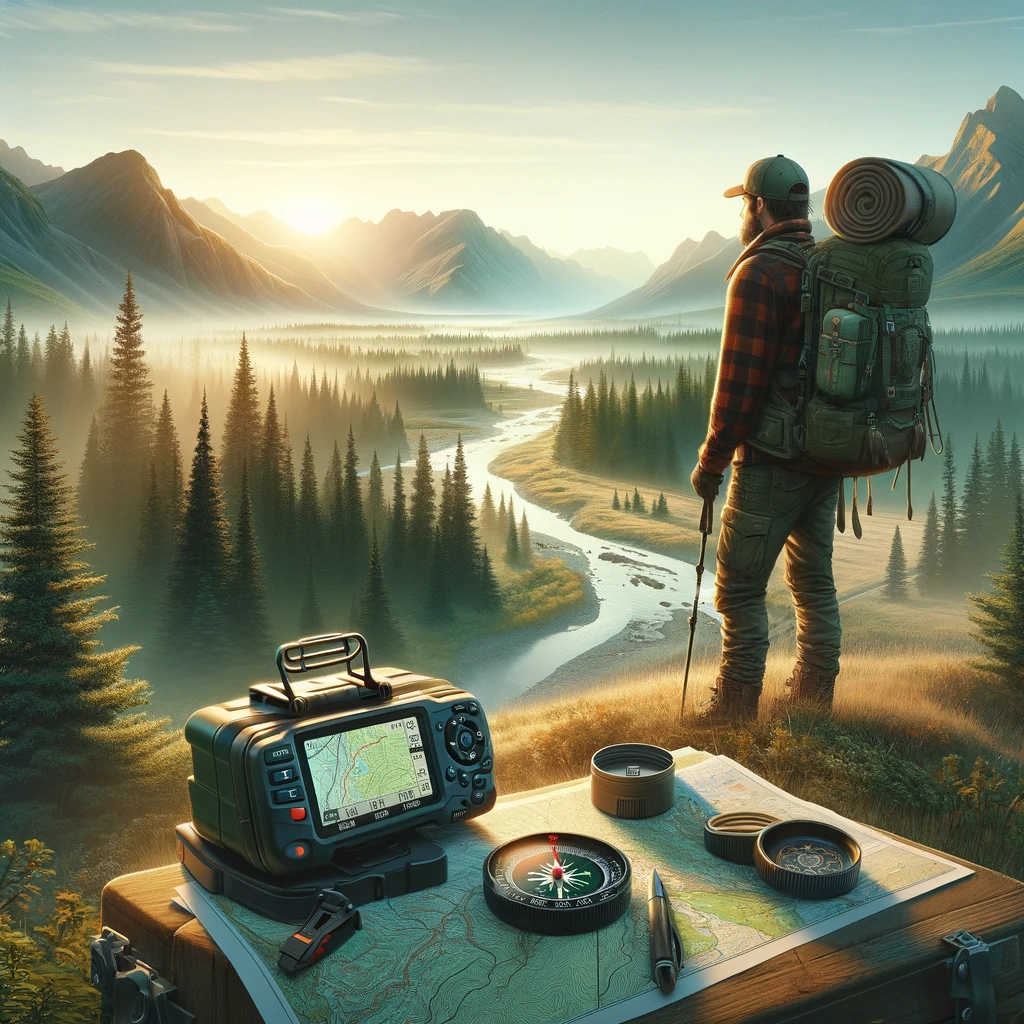
Advanced Navigation Skills for Dispersed Camping in Remote Areas are crucial for wilderness exploration. As adventurers leave marked trails behind, navigation becomes their lifeline in unpredictable terrains. From dense forests to vast deserts, each environment presents unique challenges, amplified by potential weather changes and equipment failures.
This guide covers a range of navigation methods, from traditional map and compass skills to modern GPS technology, ensuring preparedness for any situation. By mastering these techniques, campers can confidently and safely immerse themselves in the exhilarating experience of remote wilderness camping.
Understanding the Basics of Wilderness Navigation
Before we dive into advanced techniques, it’s crucial to have a solid grasp of the fundamentals. Map reading is the cornerstone of wilderness navigation. Topographic maps, with their contour lines and symbols, provide a wealth of information about the terrain you’ll be traversing. Learn to interpret these maps effectively, understanding how to visualize the three-dimensional landscape from the two-dimensional representation.
Compass use and orienteering go hand in hand with map reading. A reliable compass is an indispensable tool that, when used correctly, can guide you through even the most challenging environments. Master the art of taking bearings, following azimuths, and orienting your map to the surrounding terrain.
Triangulation is a powerful technique that allows you to pinpoint your location using visible landmarks. By taking bearings to two or more known points and plotting these on your map, you can accurately determine your position. This skill becomes invaluable when GPS signals are unreliable, or your digital devices fail.
Advanced GPS and Digital Navigation Tools
In today’s tech-savvy world, GPS devices and smartphone apps have revolutionized outdoor navigation. Modern GPS units designed for outdoor use offer robust features like long battery life, rugged construction, and preloaded topographic maps. These devices can provide real-time location data, track your route, and even suggest nearby points of interest.
Smartphone apps have also come a long way, offering powerful navigation capabilities in your pocket. Apps like Gaia GPS, AllTrails, and Avenza Maps provide detailed offline maps, GPS tracking, and route planning features. However, it’s important to remember that relying solely on digital tools comes with risks. Battery life, signal availability, and device durability are all potential points of failure in remote areas.
While digital navigation tools offer incredible convenience and accuracy, they should be viewed as a complement to, rather than a replacement for, traditional navigation skills. The most prepared adventurers know how to integrate both methods seamlessly.
Integrating Traditional and Modern Navigation Methods
Combining traditional and modern techniques is the key to genuinely mastering wilderness navigation. By using a map and compass in conjunction with GPS, you create a robust system that leverages both methods’ strengths while mitigating their weaknesses.
For example, you might use your GPS to determine your general location quickly, then fine-tune this information using map and compass techniques. Or, you could use your compass to maintain a steady bearing while using your GPS to track your progress and ensure you’re not veering off course.
Redundancy is crucial in remote areas. Always carry multiple navigation tools and know how to use each of them effectively. A waterproof paper map and compass should be non-negotiable items in your pack, even if you primarily rely on digital navigation.
Terrain Analysis and Route Planning
Advanced navigation goes beyond simply knowing where you are; it involves understanding the terrain and planning your route accordingly. Topographic maps are invaluable for this purpose. Learn to read contour lines to assess the steepness of slopes, identify potential water sources, and spot natural features that can serve as navigational aids.
When planning your route, look for natural landmarks that can serve as waypoints. Distinctive peaks, river junctions, or unique rock formations can all help you confirm your location as you travel. Always plan for contingencies, identifying alternate routes and potential campsites in case you need to change your plans due to weather, terrain, or other unforeseen circumstances.
Navigation in Challenging Conditions
Some of the most rewarding dispersed camping experiences occur in challenging environments, but these also present the most significant navigational difficulties. Your navigation skills will be tested in low visibility conditions, such as fog, darkness, or dense forest. Practice dead reckoning – the art of maintaining your course using time, speed, and direction estimates when visual cues are limited.
Different environments require different navigation strategies. In the desert, where landmarks can be scarce, precise compass work and careful attention to subtle terrain features become crucial. In mountainous areas, understanding how elevation affects your route and being able to read the complex topography is essential. Arctic environments present unique challenges with magnetic anomalies and the potential for white-out conditions.
Advanced Waypoint and Bearing Techniques
As you become more comfortable with basic navigation, you can incorporate advanced techniques to improve your accuracy and efficiency. Creating and using waypoints effectively can significantly enhance your navigation. Learn to choose strategic waypoints that are easily identifiable both on your map and in the terrain.
Advanced bearing calculations allow for more precise navigation over long distances. Techniques like back bearings, leapfrogging (moving between a series of short, accurate legs), and boxing around obstacles can help you maintain your course in complex terrain.
Natural Navigation Skills
While modern tools are handy, there’s something deeply satisfying about navigating using only the natural world around you. Celestial navigation – using the sun, stars, and other heavenly bodies to determine direction and location – is a skill that has guided explorers for millennia. Learning even basic celestial navigation can be a valuable backup skill.
Natural indicators like vegetation patterns, prevailing winds, and animal behavior can also provide navigational clues. In some environments, subtle changes in plant life or terrain can indicate direction or proximity to water sources. Developing an eye for these details can greatly enhance your overall navigation abilities.
Emergency Navigation and Self-Rescue
Despite our best preparations, emergencies can still occur. Knowing how to navigate when lost or disoriented is a critical skill. Learn techniques for reorienting yourself, such as the “stop, think, observe, plan” method. Understand how to effectively signal for help and leave markers that can guide rescuers to your location.
In a worst-case scenario, you may need to improvise navigation tools from natural materials. Knowing how to create a rudimentary compass or sundial can be a lifesaver in emergencies.
Practicing and Honing Advanced Navigation Skills
Like any skill, advanced navigation techniques require practice to master. Create challenging navigation scenarios in familiar areas before testing your skills in remote locations. Participate in orienteering events or wilderness navigation courses to learn from experienced navigators and push your skills to the next level.
Build a personal navigation kit that includes both traditional and modern tools. This might consist of a high-quality compass, waterproof maps, a reliable GPS device, extra batteries, and a smartphone with offline maps downloaded.
Ethical Considerations and Leave No Trace Principles
As we venture into remote areas, it’s crucial to remember our responsibility to preserve these pristine environments. Practice Leave No Trace principles in all aspects of your camping, including navigation. Avoid marking trees or creating cairns that can disrupt the natural environment and confuse other travelers.
When using digital navigation tools, be mindful of their impact. GPS tracking and constant smartphone use can detract from the wilderness experience for yourself and others. Find a balance that allows you to navigate safely while immersing yourself in the natural world.
Conclusion
Mastering advanced navigation techniques opens up a world of possibilities for dispersed camping in remote areas. By combining traditional skills with modern technology, you can confidently explore some of the most challenging and rewarding wilderness environments.
Remember, navigation is not just about reaching your destination but the journey itself. Each navigation challenge you overcome adds to your experience and deepens your connection with the natural world. As you continue to hone your skills, you’ll find that your ability to read the landscape becomes almost intuitive, allowing for a richer and more immersive outdoor experience.
Now that you’re armed with these advanced navigation techniques, it’s time to put them into practice. Plan a challenging navigation-focused camping trip to test your skills. Start with shorter trips in familiar areas before gradually increasing the difficulty and remoteness of your adventures.
For more information on essential gear for your dispersed camping adventures, check out our ultimate checklist for dispersed camping gear. And if you’re looking for inspiration on where to go, our guide on how to find the best dispersed camping spots is a great place to start.
Leave a Reply